Mrs Llewellyn-Smythe
Hallowe'en PartyMrs Llewellyn-Smythe is known chiefly through the people who remember her and the documents left in her name, yet her death and estate become a fulcrum of the investigation. For years her will followed a settled pattern; shortly before she died, an extraordinary codicil appeared to transfer her fortune to Olga Seminoff. The discovery that this document was forged does not resolve the matter: testimony about a separately witnessed writing raises the possibility that a genuine codicil also existed.
Identity and Estate
Mrs Llewellyn-Smythe was a wealthy woman with established family and charitable commitments. According to her solicitor, Fullerton, Harrison and Leadbetter, she had not changed the fundamental disposition of her estate for many years. Her money was left jointly to her nephew, Hugo Drake, and his wife, who was also his first cousin and Mrs Llewellyn-Smythe’s niece; if one died before her, the other would inherit. Her wills also included charitable bequests and legacies to old servants, with some changes over time as charities or recipients changed.
Her estate included more than a fortune to be divided. She had built a bungalow and left the landscape designer who had worked for her the right to live in it for as long as he wished. She also provided an income for maintaining the Quarry Garden and allowing the public to walk there. These arrangements suggest a pattern of provision extending beyond her immediate family: toward charities, longtime employees, and the continued care and public use of the garden.
The Unexpected Codicil
The document that disrupted this settled pattern was said to have been made about three weeks before her death. Unlike her previous wills, it had not been drawn up by her usual legal firm. It was presented as a codicil in her own handwriting, retaining a few charitable gifts but omitting legacies to old servants and leaving the entire residue of her considerable fortune to Olga in gratitude for devoted service and affection. To those familiar with her past decisions, this was not merely a change in beneficiaries but a startling reversal of her customary priorities.
The proposed gift prompted the possibility that her family might challenge the document on grounds of impaired judgment or undue influence, although this is raised as a possibility, not an established claim. The legal examination, however, produced a more direct objection. Handwriting experts found only a faint resemblance to Mrs Llewellyn-Smythe’s writing and judged the codicil a complete forgery. Her dislike of typewriters had led her to ask Olga to write personal letters for her, copying her handwriting as closely as possible; at times Olga had even signed Mrs Llewellyn-Smythe’s name. That practice gave Olga extensive familiarity with the appearance of her employer’s writing, but the experts could distinguish the imitation from the original.
Proceedings to contest the document were being prepared. Before they reached court, Olga disappeared, leaving some of her belongings behind. Local accounts speculated that she had left the country, changed her name, or gone to friends, but none of those possibilities is confirmed. Her departure deepened suspicion around the forged codicil without, by itself, settling what had happened or what Mrs Llewellyn-Smythe had actually intended.
Death and Conflicting Evidence
Mrs Llewellyn-Smythe’s death had been treated as natural. She had heart trouble and was regularly attended by a doctor; those discussing the case say that no one had questioned the natural-cause conclusion. A later suggestion that Joyce Reynolds might have heard Olga administer medicine that tasted different or bitter is explicitly hypothetical. It raises a line of inquiry, not proof that Mrs Llewellyn-Smythe was poisoned or that her death was connected to the forgery.
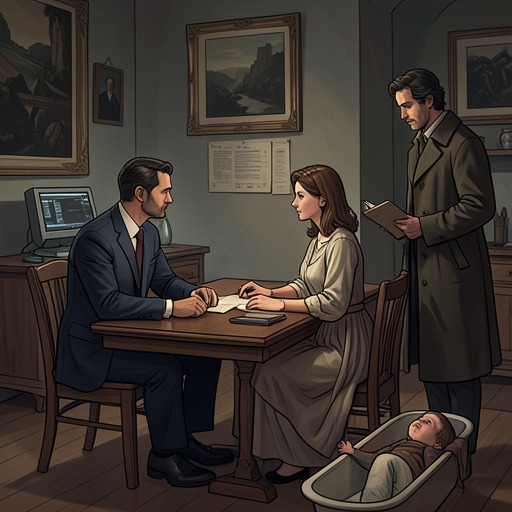
A separate account complicates the document history. Harriet Leaman recalled being called, with a young garden worker named Jim, to Mrs Llewellyn-Smythe’s room on a day when the older woman had not felt well. Papers lay on the desk. Mrs Llewellyn-Smythe sent Olga out, covered the upper part of a sheet with blotting paper, and asked the two visitors to witness what she wrote and her signature. Leaman remembered the scratchy pen Mrs Llewellyn-Smythe used instead of a ballpoint, several lines of writing, and the request that each witness add a name and address. She also recalled turning as she left because the door did not always latch properly. Her account establishes that she remembered witnessing a writing; it does not, on its own, establish that the writing was the codicil later submitted for probate.
After contacting Mr Fullerton, Hercule Poirot reported that the forged codicil produced for probate had not been witnessed by Leaman. Its witnesses were Mary Doherty, a former servant who had died, and James Jenkins, who had gone to Australia. The distinction matters: Leaman’s remembered scene and the witnesses named on the forged document cannot simply be treated as the same signing. The discussion therefore allows for the existence of a real codicil as well as the forged one, while leaving the relationship between the two documents unresolved at this point.
Narrative Significance
Mrs Llewellyn-Smythe’s importance lies in the uncertainty her absence leaves behind. The conventional will, the startling gift to Olga, the expert finding of forgery, and Leaman’s vivid recollection each offer a different kind of evidence: established legal practice, a disputed document, forensic comparison, and a witness’s memory of a signing. None can be collapsed into another. In particular, having seen Mrs Llewellyn-Smythe write and sign something is not the same as proving that the document later submitted for probate was genuine or properly witnessed.
That uncertainty also keeps suspicion about her death separate from the demonstrated fraud. Her heart trouble and regular medical attendance support the natural-death account reported by those questioned, while the imagined medicine incident remains conjecture. Through these unresolved distinctions, Mrs Llewellyn-Smythe becomes more than the wealthy deceased whose estate is contested: she is the absent author whose handwriting, intentions, and final acts must be reconstructed from documents and memories that do not yet align.